


Analyst working with data dashboards
Tableau Platform focus

RETIRE TABLEAU? START WITH UNDERSTANDING THE ESTATE.

Tableau environments can accumulate years of workbooks, dashboards, published data sources, extracts, calculations and dependencies. Moving them has meant discovery, analysis, rebuilding and validation. A new generation of migration approaches is beginning to change how that work gets done.

The difference

Why Tableau migration is different

A Tableau environment is built around more than dashboards. Workbooks contain views, dashboards, stories and data connections. Published data sources can be shared across workbooks, while extracts can be embedded in workbooks or data sources.

That makes the migration problem less about moving pieces of content and more about understanding how everything fits together. What depends on what? Which definitions need to be preserved? Which content is still in use? And which parts of the estate no longer need to make the journey?

Featured content · Video / Article Tableau migration: what changes with an agentic approach Watch / Read
The estate

The Tableau estate is more than workbooks

Before anything can be migrated, the estate has to be understood. That means looking beyond what users see to workbooks, data sources, extracts, calculations and dependencies underneath the reporting layer.

A Tableau environment can contain workbooks connected to shared data sources, while calculations, sets, groups, bins, parameters and field customizations can form part of data source metadata. Over time, those relationships can become difficult to see from the reporting layer alone.

Some content may be used.
Some may duplicate analysis elsewhere.
Some may depend on data sources or extracts.
And some may no longer matter.

The challenge is therefore not to inventory the estate, but to understand it well enough to decide what should move, what should be rebuilt, and what should be left behind.

The model

How the Tableau migration model is changing

The objective remains the same: understand the Tableau estate, determine what needs to move, rebuild it on the target platform, and validate the result. What has changed is how the work can be performed.

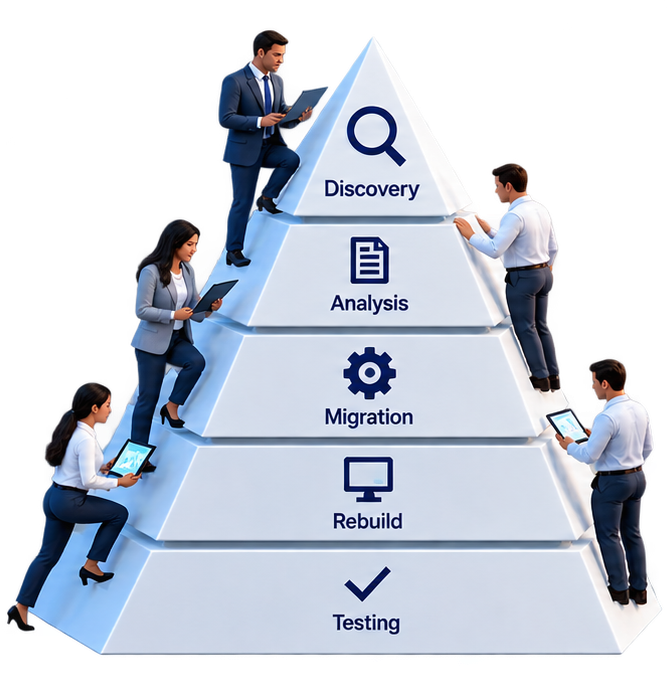
Traditional migration

People at the center
Traditional
migration
Discovery Analysis Migration Rebuild Testing

Specialist teams drive the work, often sequentially, with people responsible for understanding workbooks, data sources, dependencies and business logic across the migration.
Migration accelerators

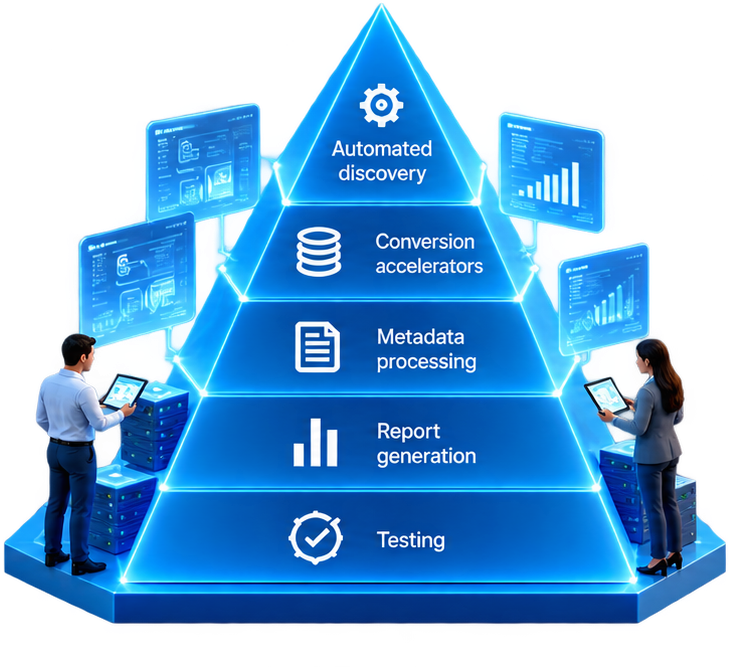
Automation supporting people
Migration accelerators
Automated discovery Conversion accelerators Metadata processing Report generation Testing

Repeatable parts of the migration can be automated, reducing manual effort while people continue to orchestrate the overall process.

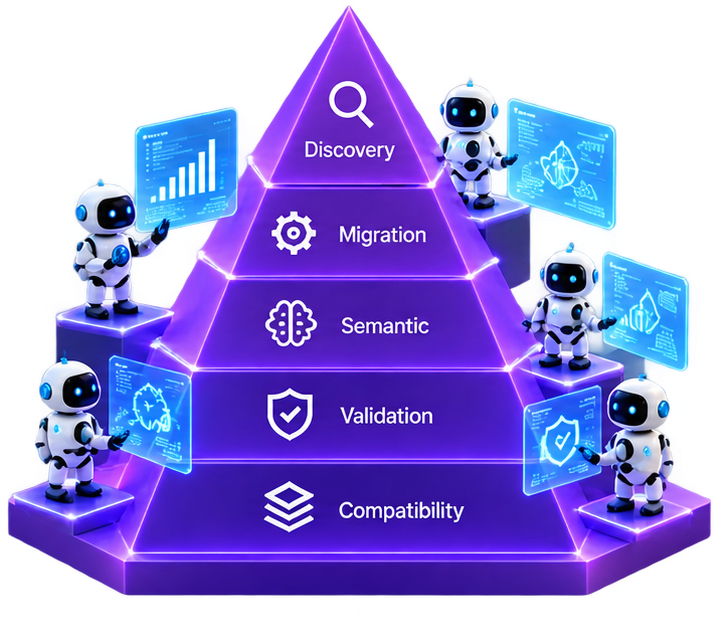
Agentic migration

Specialized agents working in parallel
Agentic
migration
Discovery Migration Semantic Validation Compatibility

AI agents can take on specialized migration workloads and work across multiple stages, while human experts provide oversight, judgment and exception handling.

The shift is not simply from less automation to more automation. It is from people coordinating each stage of migration to specialized agents handling defined workloads in parallel.

The conversation

The conversation around Tableau migration

Modernize BI brings together analysis, news and perspectives on Tableau migration, modernization and the approaches shaping the next generation of BI.

Analysis and perspectives

Deep dives into Tableau migration, platform complexity, migration approaches and emerging practices.

Industry news

Developments across Tableau, BI migration and modernization that matter to organizations planning their next move.

Videos

Conversations, explainers and platform-specific perspectives on Tableau migration and modernization.